

What Cringe Culture Takes From Us
From classrooms to coming out, cringe is part of becoming yourself and kids need space to do it.

In middle school, we had these rotating elective classes every quarter: art, tech, speech, something else I can’t remember. What I do remember is the panic that came with being in a class full of kids I didn’t know. They all seemed to know each other. Many played sports. They were loud and confident. I wasn’t any of those things. I was newer to the community, quiet, bookish. Invisible on purpose.
One week in our speech elective, we had to do timed, impromptu speeches. Everyone in class had written topics on slips of paper to put in a hat. I pulled mine and saw the words “flag football,” and my heart dropped and raced simultaneously. I knew nothing about football, other than my dad, who at this point I’d stopped seeing, had spent most birthdays and Christmases trying to indoctrinate me into becoming a Miami Dolphins fan with a closet’s worth of hats and starter jackets. (It didn’t work.)
To top it off, when I got up to speak, nervous, sweaty, desperate to prove I wasn’t the soft, shy “fag” some of these same kids had already coded me as, I let the fear in my brain slip accross my lips. I said “fag football.” Out loud. In front of everyone.
The laughter. The heat behind my ears. The kind of shame you feel in your teeth.
I doubt anyone remembers it, but it changed me.
What Cringe Culture Really Costs Us
That was probably the first moment I understood what it meant to be “cringe.” Before we had a word for it and we turned it into a brand of humor. Back when it just felt like humiliation that might eat you alive.
That moment shaped me and it’s part of the reason I’m able to speak in front of people now. Part of the reason I over-prepare and double-check every word. Not necessarily because I wanted to, but because I had to learn how to recover, how to take risks, how to feel it all and keep going.
It makes me wonder what happens to a generation that never gets the space to do that.
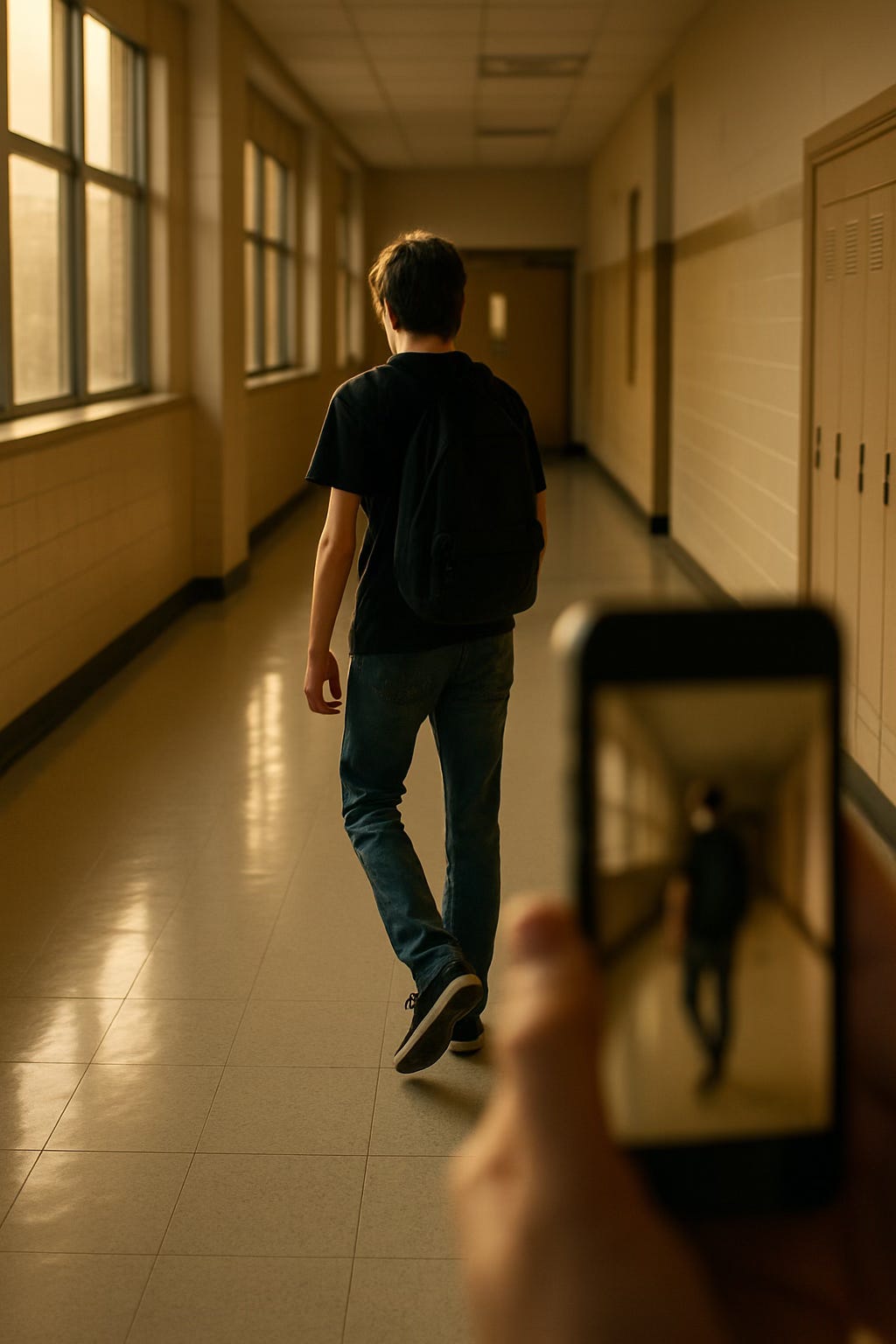
Cringe, or the fear of being it, has become the ultimate silencer. We treat it like a punchline, but it’s more like a warning sign: Don’t try too hard. Don’t care too much. Don’t be vulnerable, emotional, or visible. Don’t get caught doing something that might become content and in the process we’ve raised an entire culture of young people who are scared to be authentic, because authenticity is risky, and anything risky might go viral.
For queer kids especially, being caught caring too much isn’t just embarrassing, it’s dangerous. You learn to survive visibility before you ever choose it.
Writer Ocean Vuong talks about this idea in his reflections on self-expression and shame. Cringe, he suggests, is what we weaponize when we lose empathy. It becomes a form of emotional policing. Instead of inviting people into a deeper connection, we shut them down before they even get to finish becoming.
It’s not just teens, either. Adults do this too by performing cool detachment instead of presence. Sarcasm instead of care. We’ve learned to brand ourselves into safety, but the cost is that we start to vanish from our own lives.
Dancing, AI Friends, and the Ghost of Joy
In releasing his new album last week, Tyler, the Creator said he made Don’t Tap the Glass so people would dance. Not sit around intellectualizing it. Not stream it in silence. Dance. Move. Feel something. But instead, he says, the joy he hoped to spark is mostly a ghost.
“A natural form of expression and a certain connection they have with music is now a ghost… because of the fear of being filmed.”
Fear of being seen has overtaken the act of living. We’re so worried about looking stupid that we stop ourselves from ever being free. That fear doesn’t just affect art or performance. It affects identity, emotion, curiosity, and growth.
We got to live our worst moments in classrooms, not on camera. Today’s kids don’t get that grace.
That brings us to something that’s both fascinating and a little devastating: the rise of AI friends. According to a recent NPR report, nearly three-quarters of teens have used AI companions to talk, flirt, seek advice, or just feel less alone. One in three say they’ve had serious conversations with AI instead of other humans.
Let that sit for a second.
We’re not talking about kids who are emotionally disengaged. We’re talking about kids who feel so watched, so exposed, that they turn to a chatbot for privacy, safety, and for connection without the threat of being laughed at.
I get it. I really do. But what happens to the parts of us that grow from awkwardness? From embarrassment? From the stumble and the recovery and the unexpected joy of getting back up?
Cringe isn’t failure. It’s evidence that you were trying. It’s the scar of effort. We need those scars. They’re proof we showed up.
You can’t find yourself if you’re busy performing safety.
Being Human Is the Assignment
We are more connected than ever, but we’re not connecting. We’re watching each other. Curating each other and branding our lives into silence. Somewhere in that mess, we’ve forgotten how important it is to be witnessed not as content, but as human.
Don’t tap the glass. Let people be human.
So let yourself dance. Let your kids be weird. Feel things in public. Laugh too loud. Risk the cringe.
Because honestly? That’s the whole point.
What are we doing here, if not to feel the damn thing?
The latest from Tyler, The Creator: 15 seconds in and this track was immediately added to my running playlist.
Yes to all of this! As a music person, I read Tyler's statement when he released the album and was happy to see it pop up here too.